
Best Fountain Pen Inks in Canada: How to Choose Your First Bottle
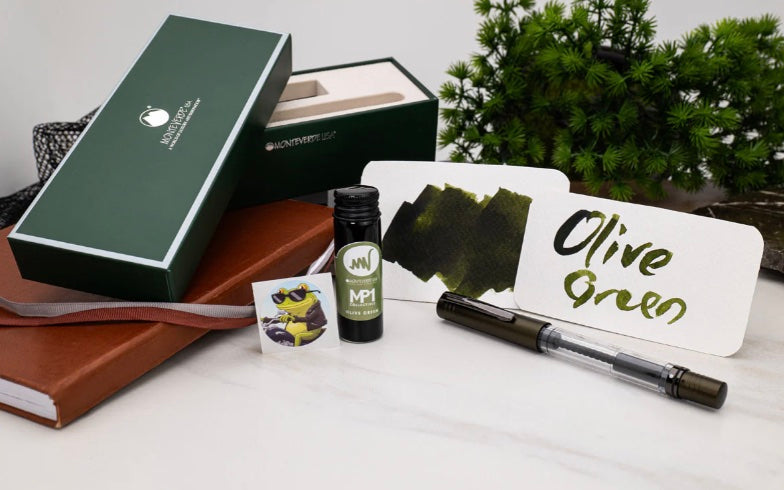
At least once a week, someone stands at our counter holding a pen they just bought, looks at the wall of ink bottles behind me, and says some version of the same thing: "Okay, but which one do I actually buy first?" It is a great question, and an overwhelming one, because there are hundreds of colours and a dozen brands staring back at them. So I always give the same honest answer before anything else.
If you want one safe, beautiful first bottle of fountain pen ink, get a standard Diamine in a colour you love, or a Pilot Iroshizuku if you want to splurge a little. Both are well-behaved, they flow nicely in almost any pen, and they will not stain or clog while you are still learning. Everything else on this page is about helping you choose with a bit more confidence than "the bottle that looked pretty," because once you know what to look for, picking your first fountain pen ink is genuinely fun.
Key Takeaways
- For your first bottle, a standard Diamine ink (about $20 CAD) is the easiest, safest, best-value pick for almost anyone in Canada.
- If you want to spend a little more for stunning colour and flawless flow, Pilot Iroshizuku (around $35 CAD) is worth it.
- Choose based on use case first, colour second: everyday writing, journaling, office documents, waterproofing, or shimmer all point to different inks.
- Bottled ink is cheaper per millilitre, comes in far more colours, and is better for the environment than cartridges, but you need a converter to use it.
- Almost any quality fountain pen ink works in almost any fountain pen. Avoid only India ink, calligraphy ink, and pigmented inks not made for fountain pens.
- We are an authorized Canadian dealer and ship ink Canada-wide from Ontario, so you skip US duties, slow border waits, and the risk of fakes.
The best fountain pen inks for your first bottle
The best first bottle of fountain pen ink is a standard Diamine in a colour you love, because it costs about $20 CAD, behaves beautifully in any pen, and comes in 100-plus colours. That is the answer I give most often, but the better question is what you actually want to do with the ink. Here are the picks I hand people across the counter, organized by what they tell me they need.

Best all-rounder first bottle: Diamine standard inks
Diamine is where I send most first-time buyers, and it is what I reach for when I just want to write. The standard line is a dye-based ink that flows smoothly, dries at a sensible pace, and rarely causes trouble in any pen from a $30 starter to a $400 gold-nib. Diamine Oxblood, Sapphire Blue, and Ancient Copper are three of our most-reordered colours, and at roughly $20 for an 80ml bottle, it is the best value in the shop. If you only buy one bottle this year, browse the Diamine inks and pick a colour that makes you want to write.
Best splurge first bottle: Pilot Iroshizuku
Pilot Iroshizuku is the ink I recommend when someone wants their first bottle to feel special, because the flow is flawless and the colours have a depth that is hard to describe until you have written with one. Kon-peki (a vivid sky blue) and Yama-budo (a rich grape) are the two that sell themselves the moment a customer dips a nib in the tester. At around $35 CAD for 50ml it costs more per millilitre than Diamine, but the writing experience is genuinely a step up. The Pilot Iroshizuku inks are the bottles I gift to friends who are getting serious about the hobby.
Best safe blue or black for work: Lamy or Diamine
For office and document writing, a standard Lamy or Diamine black or blue-black is the dependable choice, because these colours read as professional and resist smudging better than bright dye colours. Lamy Blue-Black and Diamine Registrar's (an iron-gall ink that becomes water resistant as it dries) are both popular with customers who sign forms or keep work notebooks. If your handwriting needs to survive a coffee spill on a contract, this is the category to start in.
Best fun first colour without the risk: Wearingeul
If you want a colour with personality but you are nervous about behaviour, a literature-inspired Wearingeul ink is a lovely middle ground, because they are dye-based and well-mannered while still feeling like something special. The Wearingeul inks are built around stories and characters, and customers who came in for "just a blue" often leave with one of these instead. They give you a memorable colour without the maintenance demands of a shimmer or pigment ink.

Best first shimmer ink (with one caveat): Diamine Shimmertastic
If you have your heart set on sparkle for your first bottle, a Diamine Shimmertastic is the friendliest way in, as long as you shake it gently before each fill and clean your pen a little more often. The shimmer particles need a wetter, broader nib to show up well, so they are not ideal in a fine or extra-fine starter pen. I love them for greeting cards and journaling flourishes, but I tell people they are a "second bottle" more often than a true first one.
Best fountain pen inks by use case
Use this table to match your main writing job to a recommended ink and a place to start. These are the pairings I make at the counter every week, with prices in Canadian dollars.
| Use case | Recommended ink | Why it works | Where to start |
|---|---|---|---|
| Everyday writing | Diamine standard (e.g. Sapphire Blue) | Smooth flow, fast-enough drying, forgiving in any pen, ~$20 CAD | Diamine inks |
| Journaling & letters | Pilot Iroshizuku (e.g. Kon-peki) | Beautiful shading and depth, flawless flow, ~$35 CAD | Pilot Iroshizuku inks |
| Office & documents | Lamy / Diamine blue-black or black | Professional, low-smudge, often more water resistant | Shop fountain pen inks |
| Waterproof / archival | Iron-gall (e.g. Diamine Registrar's) | Resists water and fading once dry, good for records | Shop fountain pen inks |
| Fun colour, low risk | Wearingeul | Dye-based and well-behaved, with real personality | Wearingeul inks |
| Shimmer / special occasions | Diamine Shimmertastic | Sparkle for cards and flourishes (needs a wetter nib) | Diamine inks |
How to choose fountain pen ink: what actually matters
When you are choosing fountain pen ink, four properties matter more than colour: flow, drying time, water resistance, and shading. Get these right for your pen and your handwriting, and almost any bottle will make you happy. Here is how I explain each one to customers without sending them down a rabbit hole.
Flow is how wet or dry the ink writes, and it should match your nib. A dry ink in a fine nib can feel scratchy and skippy, while a very wet ink in a broad nib can feather on cheap paper. Diamine and Pilot inks sit comfortably in the middle, which is exactly why they make such safe first bottles.
Drying time is how long the ink takes to set on the page, and it matters a lot if you are left-handed or write quickly. Iron-gall and blue-black inks tend to dry faster, while heavily saturated colours and shimmers dry slower. If you smudge constantly, start with a quicker-drying blue-black before chasing a saturated purple.
Water resistance separates "looks pretty in a journal" from "survives the real world." Standard dye inks will smear if your notebook gets wet, while iron-gall inks like Diamine Registrar's become genuinely water resistant as they cure. Shading is the bonus: it is the way a single colour goes light and dark across a letter, and Pilot Iroshizuku is famous for it. None of these properties is right or wrong, they just need to match how and where you write.

A quick word on ink types
Fountain pen inks come in a few types: dye-based (the everyday standard), pigment (more water resistant, needs more cleaning), iron-gall (darkens and water-proofs as it dries), and shimmer or sheening inks (special-effect colours). For your first bottle, a dye-based ink is almost always the right call, because it is the most forgiving in any pen. If you want the full breakdown of how each type behaves and which pens suit them, we cover it properly in our guide to the types of fountain pen ink. And if you are choosing more for mood and personality, our pieces on ink colour psychology and the most unique ink colours are a fun place to wander.
Bottled ink vs. cartridges (and why a converter bridges the gap)
Bottled ink is the better long-term choice for most people because it is far cheaper per millilitre, comes in hundreds more colours, and creates much less plastic waste than cartridges. A single $20 bottle of Diamine will refill a pen dozens of times, while a pack of proprietary cartridges costs more and locks you into a handful of standard colours. Cartridges win on exactly one thing: convenience when you are travelling or topping up on the go.
The piece beginners miss is the converter, which is the small reusable device that lets a cartridge pen draw ink straight from a bottle. Most modern fountain pens either include a converter or accept one for a few dollars, so you rarely have to choose between the two systems. I usually tell new customers to keep one cartridge in the pen as a backup and do their everyday filling from a bottle.
If your pen is a piston or vacuum filler (like a TWSBI), there is no cartridge option at all, it only takes bottled ink. So the moment you buy that style of pen, your first bottle of ink stops being optional and becomes the thing that makes the pen usable.

Caring for your ink and pen
Fountain pen ink lasts for years if you keep it sealed, cool, and out of direct sunlight, and your pen stays happy if you flush it with cool water every few weeks or whenever you change colours. The two most common problems I see at the counter, a pen that has gone dry or a colour that looks muddy, almost always trace back to skipped cleaning rather than a bad ink.
Store bottles upright with the cap tight so the ink does not evaporate or grow anything, and give shimmer inks a gentle shake before each fill so the particles stay suspended. If you are switching from a dark, saturated colour to a light one, flush until the water runs clear so you do not muddy the new bottle. A pen you use daily basically cleans itself through use; the pens that clog are the ones left inked and forgotten in a drawer for months.
Where to buy and try fountain pen ink in Canada
The easiest place to buy fountain pen ink in Canada is from an authorized Canadian dealer that stocks the major brands and ships domestically, so you avoid US duties, long border delays, and the small but real risk of counterfeit bottles. We are an authorized dealer for the brands we carry, we ship ink Canada-wide from Ontario, and we keep testers inked in the Brampton store so you can write with a colour before you commit to a whole bottle.
If you are not sure where to begin, browse our full range of fountain pen ink and start with a standard Diamine in a colour you love. And if you want to go deeper on which brands suit which pens before you buy, our rundown of the best fountain pen ink brands is the natural next read.
FAQ
1. What is the best fountain pen ink for beginners?
The best fountain pen ink for beginners is a standard Diamine, because it is dye-based, flows smoothly in almost any pen, and costs about $20 CAD for a generous bottle. Pilot Iroshizuku is the next step up if you want richer colour and slightly better flow. Both are forgiving and will not stain or clog while you are still learning.
2. What's a good first bottle of fountain pen ink to buy?
A good first bottle is a standard Diamine or a Pilot Iroshizuku in a colour you actually like, in a safe blue, blue-black, or a colour that makes you want to write. Pick the use case first (everyday, journaling, or office), then choose the colour second. Either brand will behave well in a beginner pen.
3. Is bottled ink better than cartridges?
Bottled ink is better for most writers because it is cheaper per millilitre, comes in hundreds more colours, and produces far less plastic waste. Cartridges win only on portability and quick top-ups. A converter lets a cartridge pen use bottled ink, so you can get the best of both.
4. Can I use any brand of ink in my fountain pen?
Yes, almost any ink made for fountain pens works in almost any fountain pen, so you are free to mix brands and pens. The only inks to avoid are India ink, calligraphy ink, and pigmented or waterproof inks not specifically formulated for fountain pens, because they can clog and damage the feed. Stick to fountain-pen-labelled ink and you are safe.
5. Where can I buy fountain pen ink in Canada?
Buy fountain pen ink from an authorized Canadian dealer that ships domestically, so you avoid US duties, border delays, and counterfeit bottles. Blesket is an authorized dealer that ships ink Canada-wide from Ontario and keeps testers inked in our Brampton store. You can browse the full ink range online or come write with a colour in person.
6. How long does a bottle of fountain pen ink last?
A standard 80ml bottle of fountain pen ink lasts most writers a year or more, often several years, because each fill uses only a millilitre or two. The ink itself stays good for years if you keep it sealed, cool, and out of sunlight. You will almost certainly buy a second colour long before you finish your first bottle.
Come find your first bottle
If you are still deciding, the nicest way to choose is to come into the store and write with a few colours before you pick one. There is no pressure to buy, and watching an ink shade across the page is the moment most people fall for this hobby. If you would rather shop from home, browse our fountain pen ink collection, start with a standard Diamine, and we will get it to you fast anywhere in Canada.
Whatever you choose, do not overthink your first bottle. Pick a colour you love, fill your pen, and write something. That is the whole point. And if the pen itself is the missing piece, Blesket's fountain pen store carries everything from starter pens to gold-nib grails, with fast shipping across Canada.
Warmly,
Salome


Comments