
Hobonichi Original vs Cousin vs Weeks: Which Techo Is Right for You?
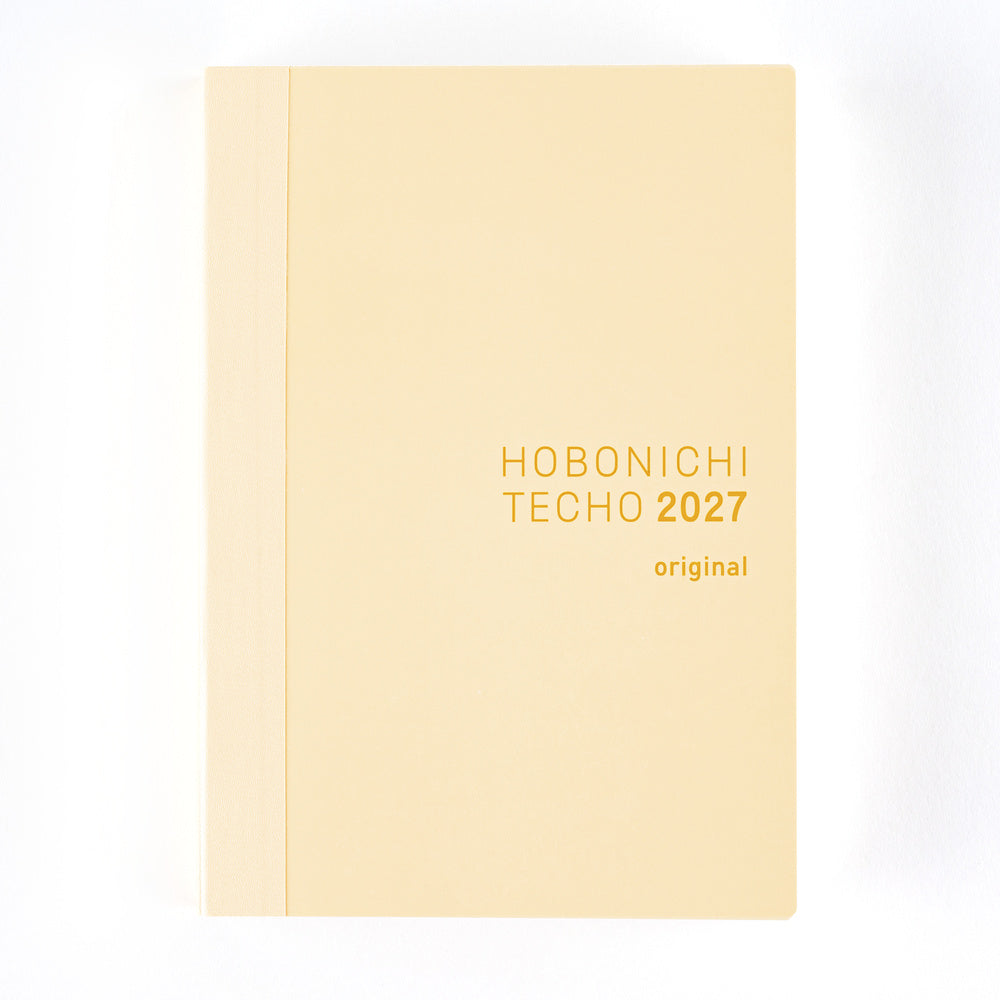
The question I hear most at the counter every fall is some version of "Hobonichi Original vs Cousin, or should I get the Weeks?" Here is the short answer I give.
Get the Original (A6) if you want a page for every day in a book small enough to carry. Get the Cousin (A5) if you want that daily page plus a proper weekly schedule, and you're happy for the book to live on a desk. Get the Weeks if you plan by the week and want the lightest of the three.
Below is everything behind that answer: Hobonichi's official 2027 sizes, weights and page counts, what each book costs in Canadian dollars once it has a cover, and the English versus Japanese details that trip people up. If you want the wider picture, including paper, pens and accessories, my complete Hobonichi Techo 2027 guide covers it. This post sticks to the head-to-head.
Key Takeaways
- The Original and Cousin have identical daily pages (377 of them in 2027). The Cousin is twice the size and adds 106 pages of weekly schedule.
- The Weeks has no daily pages: a week on the left, grid notes on the right, and 75 memo pages at the back. It weighs about 131 to 140 g depending on the design, against 195 g for the Original and 445 g for the Cousin.
- For 2027, the Original, Cousin, Planner, Weeks, Weeks Mega and HON all come in English. The Avec, Day-Free and 5-Year Techo are Japanese only.
- The Original and Cousin are designed to go in a separate cover. The Weeks comes bound in its own cover, so it needs no separate one, and the HON has a hardcover built in.
- All three use thin Tomoe River paper, which shows off fountain pen ink but rewards a finer nib and a little drying time.
Hobonichi Original vs Cousin vs Weeks at a Glance
The Original, Cousin and Weeks differ most in page size, weight and whether you get daily pages, weekly pages or both. Every spec below comes from Hobonichi's official 2027 Techo Type Guide and its 2027 English product specifications; where the two differ, as they do for the Weeks, I've used the product specifications. Prices are Blesket's listed prices on September 30, 2026 for the 2027 English Original, Cousin and Weeks books.
|
Spec |
Original (A6) |
Cousin (A5) |
Weeks |
|---|---|---|---|
| Layout | One page per day | One page per day, plus weekly pages | One week per spread, notes page opposite |
| Size (W x H) | 105 x 148 mm | 148 x 210 mm | About 94 x 188 mm |
| Thickness | 15 mm | 18 mm | 10 to 11 mm, by design |
| Weight | About 195 g | About 445 g | About 131 to 140 g, by design |
| Total pages | 464 | 544 | 240 |
| Daily pages | 377 | 377 | None |
| Weekly pages | None | 106 (vertical, 5 AM to 4 AM) | 114 (horizontal) |
| Monthly calendars | Dec 2026 to Mar 2028 | Dec 2026 to Mar 2028 | Dec 2026 to Mar 2028 |
| Memo pages | 17 | 6 | 75 |
| Grid size | 3.7 mm | 3.7 mm | 3.55 mm |
| Paper | Tomoe River | Tomoe River | Tomoe River |
| Cover | Designed for an Original (A6) cover | Designed for a Cousin (A5) cover | Bound in its own cover; an optional Weeks cover can go over it |
| Blesket price, 2027 English book | $57 | $89 | $51 to $92, by design |
| Best for | Daily journaling you carry | Daily pages plus a desk schedule | Weekly planning on the go |
Two numbers explain most of the decision. The Original and Cousin share the same 377 daily pages, so the Cousin's extra bulk comes from its bigger page and its 106-page weekly section. Its memo and yearly index sections are shorter, so in total it has 80 more pages than the Original. And the Cousin weighs more than three times as much as the Weeks, which matters more than people expect once it's in a bag.
The Hobonichi Original (A6): A Page a Day That Travels

The Hobonichi Original is the classic Techo: one A6 page for every day of the year, in a book Hobonichi describes as the same size as a paperback. It has been made since the 2002 edition, and the 2027 English Original weighs about 195 g, light enough to live in a handbag or a small tote.
Each daily page has a to-do list at the top, a 24-hour timetable down the side and Hobonichi's 3.7 mm grid everywhere else, with a faint "secret line" you can use to split your schedule from your notes. The pages change colour every month, and tabs along the edge make finding March a quick flick of the thumb.
I recommend the Original to most first-timers, and so does Hobonichi: its own type guide suggests starting with the classic Original. The page is small enough that a two-line day doesn't feel like a failure, and big enough for a proper journal entry when the day deserves one. What you give up is a weekly view, and if you write long entries or paste in tickets every day, an A6 page fills fast.
Original or Planner? Both are English A6 daily books that fit the same Original covers, and Blesket lists them at $57 and $69. The Planner was designed under the direction of Sonya Park of the shop and brand Arts&Science: it swaps the 24-hour timetable for a single 12:00 mark, uses a slightly larger 4 mm grid, and adds week numbers and a small dinner icon to every day, across 448 pages at about 190 g. Pick the Planner if you want a quieter page, and the Original if you like the timetable and the to-do boxes.
The Hobonichi Cousin (A5): Daily Pages Plus a Real Weekly Schedule

The Hobonichi Cousin is the Original's big sibling: the same daily page layout on an A5 page, which Hobonichi calls twice the size of the Original book, plus a weekly section the Original doesn't have. The 2027 English Cousin has 544 pages and weighs about 445 g, and Hobonichi itself notes that many people keep it as a "desk techo" at home or at work rather than carrying it.
The weekly pages are the reason to buy it. Hobonichi calls them the Weekly Diary: each spread shows a full week side by side with a vertical timeline running from 5 AM to 4 AM the next morning, across 106 pages from December 28, 2026 to January 2, 2028. If you block out appointments, shifts or classes by the hour, this is the layout you want, and your schedule and your journal end up in one book.
[PHOTO TO ADD, Photo from blesket.com: the Original, Cousin and Weeks open flat, showing the daily page, the Cousin's vertical Weekly Diary and the Weeks' week plus notes page]
The daily page has room for a long entry, a meeting's worth of notes, or a pasted-in ticket and a sketch on the same day. The trade-off is plain: at 148 x 210 mm and 18 mm thick before you add a cover, it's a lot of book to carry, and it can feel like too much if your days are quiet.
The Hobonichi Weeks: Plan by the Week, Carry It Everywhere

The Hobonichi Weeks is a slim, wallet-sized weekly planner: the week on the left page, a grid notes page on the right, and a stack of memo pages at the back. At about 94 x 188 mm and 131 to 140 g, depending on the design, it is the lightest of the three and the easiest one to carry every day.
There are no daily pages, and that's the point. Each day gets a horizontal band with two small dots that divide it into three sections, which you can use for morning, afternoon and evening, and the 2027 English Weeks runs from November 30, 2026 to January 2, 2028, so you can start using it before the new year. Behind the weekly section sit 75 pages of 3.55 mm grid for lists, notes and anything else.
The Weeks comes bound in its own cover, so it needs no separate cover. Most designs are hardcovers (Hobonichi describes the Colors Weeks as a light hardcover with some give), while the White Line, Smooth and Weeks Mega Sneaker books have soft covers. If you want pockets for cards or a different look, an optional Weeks cover can go over it, and a clear cover suits most fabric and paper designs; Hobonichi says clear covers aren't suitable for its leather, PU or PVC books. Blesket's 2027 English Weeks run from $51 for the simpler designs to $92 for the leather editions. One small thing to know: Hobonichi's thread-stitched binding opens flat at 180 degrees, but its own notes exclude certain Weeks books, and it says the soft-cover White Line needs its pages held down to lie flat.
Weeks or Weeks Mega? The Weeks Mega is the same planner with about three times the notes space: 219 memo pages in the 2027 English edition against 75 in the regular Weeks, for 384 pages in total. It's a little thicker, weighs about 180 g, and Blesket's English Weeks Mega books run $59 to $76. If your Weeks is your planner and your notebook in one, the Mega is worth it; if you only track appointments, the regular Weeks is plenty.
Hobonichi Original vs Cousin: The Real Difference Is the Weekly Pages
The Hobonichi Original vs Cousin decision comes down to one question: do you want a weekly schedule in the same book as your daily pages? Both have the same 377 daily pages, the same monthly calendars from December 2026 to March 2028, the same 3.7 mm grid and the same Tomoe River paper. The Cousin adds 106 weekly pages and doubles the page size; the Original stays small and light.
Size is the second question, and it's really a carrying question. The Original at about 195 g goes everywhere, while the Cousin at about 445 g, before a cover, is a book you decide to bring. If you write big, paste things in daily, or want your work schedule and your journal in one place, the Cousin earns its weight.
Even the yearly planning pages differ slightly. The Original's yearly index shows four months per spread across 16 months, from December 2026 to March 2028, while the Cousin's shows six months per spread across the 2027 calendar year.
One correction to something I see repeated online: both books come in English now. For 2027 Hobonichi makes an English Original and an English Cousin, not only the English Planner, so language is no longer a reason to choose one over the other.
Hobonichi Weeks vs Cousin: Two Very Different Weekly Books
Get the Weeks if you mainly need a weekly plan you can carry, and the Cousin if you want a weekly plan and a full daily page in one book. Both have weekly pages, but they are built differently: the Cousin's Weekly Diary is vertical, with an hour-by-hour timeline for blocking out your day, while the Weeks gives each day a horizontal band for a few lines of plans.
The gap in size and price is large. The Weeks weighs about 131 to 140 g and starts at $51 in its own bound cover; the Cousin weighs about 445 g and costs $89 for the book before you choose a cover. If you're weighing the two, ask yourself whether you'll really write on a page for every day of the year. If the honest answer is "some days", the Weeks and its 75 memo pages is usually the happier book.
If you can't choose, the two work well together: a Weeks in your bag for appointments and a Cousin at home for journaling.
English vs Japanese Editions: What Actually Changes
The English and Japanese editions share the same sizes, paper and page layouts; what changes is the language, a few calendar details and which formats you can get at all. For 2027 the Original, Cousin, Planner, Weeks, Weeks Mega and HON come in English, while the Avec, Day-Free and 5-Year Techo are Japanese only. The 2027 books Blesket carries are the English editions.
- Calendars and holidays: the English books use Monday-start monthly calendars that don't list holidays. The Japanese books print Japanese holidays, and the Japanese Original also comes in a Sunday-start version.
- Daily quotes: the English Original and Cousin have one English quote per two-page spread. The Japanese Original and Cousin have a quote on every daily page, in Japanese.
- Start month: the English books are January start. April-start editions of the Original, Cousin and Weeks come in Japanese.
- Extras: the Japanese daily pages add the old Japanese lunisolar calendar and solar terms. The English Original and Cousin swap in their own bonus pages, such as Words to Remember and a 365 Days Check-Off Sheet.
One detail for anyone using a Techo in Canada: Hobonichi prints moon phase dates in Japan time, which runs 13 to 14 hours ahead of Eastern time. A full moon that peaks on a Tuesday evening in Toronto lands on Wednesday's page.
If you read Japanese or love the look of it, the Japanese books are lovely. If you want every word on the page to be something you can use, the English editions are the easy choice.
Where HON, Avec and Day-Free Fit
The HON, Avec and Day-Free are variations on the same formats, and each one solves a specific problem. Here is how they compare, again from Hobonichi's official 2027 specs.
|
Book |
Size |
Weight |
What's different |
2027 editions |
|---|---|---|---|---|
| HON A6 | 110 x 156 x 16 mm | About 202 g | Original pages with a hardcover attached | English and Japanese |
| HON A5 | 152 x 214 x 20 mm | About 482 g | Cousin pages, weekly section included, hardcover attached | English and Japanese |
| Original Avec | Two books, 105 x 148 x 8 mm each | About 110 g each | The Original's year in two six-month books | Japanese only |
| Cousin Avec | Two books, 148 x 210 x 10 mm each | About 260 g each | The Cousin's year in two six-month books | Japanese only |
| Day-Free | A6 or A5, 8 mm thick | About 110 g (A6), 220 g (A5) | Monthly calendars plus 171 undated grid pages | Japanese only |
HON is the Original or Cousin with a hardcover already attached, so you skip the cover decision entirely. The A6 HON has the Original's pages and the A5 HON has the Cousin's, weekly section included. Blesket lists the 2027 English HON at $76 to $85 in A6 and $99 to $110 in A5.
Avec splits a year of the Original or Cousin into two six-month books, January to June and July to December, each at about half the weight. It takes the regular Original or Cousin covers, which makes it the answer for anyone who loves the Cousin but not its 445 g.
Day-Free pairs monthly calendars with 171 undated grid pages, in A6 or A5, so you never waste a dated page on a skipped day. Original and Cousin covers fit it too. Blesket doesn't list the Avec or Day-Free books for 2027, and the same goes for the 5-Year Techo, which gives each calendar date one spread covering all five years from 2027 to 2031.
What Each One Costs With a Cover (CAD)
In Canadian dollars at Blesket, the Weeks is the cheapest complete setup at $51 and up in its own bound cover, and the Cousin is the most expensive, because its $89 book still needs an A5 cover (Blesket's start at $65), while even the $92 leather Weeks comes ready to use. Here is how the totals work, using Blesket's listed prices on September 30, 2026:
- Original: $57 for the 2027 English book, plus an A6 cover. With the Kyohei Sakaguchi Field Sky A6 cover at $74, the setup comes to $131.
- Planner: $69 for the book, and it takes the same A6 covers as the Original.
- Cousin: $89 for the 2027 English book, plus an A5 cover. With the MOTHER Mr. Saturn (Doing Fine) A5 cover at $92, the setup comes to $181.
- Weeks: $51 to $92 in its own bound cover, or $59 to $76 for the Weeks Mega. An optional Weeks cover is extra.
- HON: $76 to $85 in A6 or $99 to $110 in A5, hardcover included.
Covers carry over from year to year. The Original and Cousin books have the same dimensions in Hobonichi's 2025, 2026 and 2027 specs, so a recent Original cover fits the 2027 Original and a recent Cousin cover fits the 2027 Cousin. One exception: Hobonichi notes a Cousin size change in 2014, so check before reusing a Cousin cover from 2013 or earlier. Stock of the 2027 books changes often, so check the Hobonichi collection for what's available today.
Five Questions to Settle It
If you're still torn, five questions settle it for most people. Answer them for a normal week, not your most organized one.
- Do you plan by the day or by the week? By the day points to the Original or Cousin. By the week points to the Weeks.
- How much do you write on a normal day? A few lines or a short entry fits an A6 Original page. A long entry, meeting notes or a daily collage wants the Cousin's A5 page.
- Where will it live? If it goes in your bag every day, think Weeks (about 131 to 140 g) or Original (about 195 g). If it stays on a desk, the Cousin's 445 g doesn't matter.
- Do you want to plan your week by the hour? The Cousin's vertical Weekly Diary, with a timeline from 5 AM to 4 AM, is the only hour-by-hour weekly view of the three. The Original and Cousin daily pages also have a 24-hour timetable, but for one day at a time.
- Will you write with a fountain pen? All three use Tomoe River paper, which is thin, and Hobonichi itself notes that some inks can bleed through or take longer to dry, so test on an inconspicuous page first. I reach for a fine or extra-fine nib in a Hobonichi, and my guide to fountain pen nib sizes explains why the smaller nibs behave better on thin paper.
If your answers split between two books, let question 3 break the tie. The planner you actually carry is the planner you actually use.
Frequently Asked Questions
What is the difference between the Hobonichi Original and Cousin?
Both have the same one-page-per-day layout, 377 daily pages and Tomoe River paper. The Cousin is A5 (148 x 210 mm, about 445 g) and adds 106 pages of vertical weekly schedule, while the Original is A6 (105 x 148 mm, about 195 g) with no weekly pages.
Should I get the Hobonichi Weeks or the Cousin?
Get the Weeks if you mainly plan by the week and want to carry your planner every day; it weighs about 131 to 140 g and comes bound in its own cover, so no separate cover is needed. Get the Cousin if you want daily pages and a vertical weekly schedule in one book and don't mind a desk-sized A5.
Which Hobonichi Techo is best for a first-timer?
The Original is the safest first Hobonichi Techo, and Hobonichi's own type guide recommends it for first-time users. Choose the Weeks instead if you already know you won't write every day.
What is the difference between the Hobonichi Original and the Planner?
Both are English A6 daily books that fit Original covers. The Planner, designed with Arts&Science, has a 4 mm grid, a single 12:00 mark instead of a 24-hour timetable, and week numbers and a dinner icon on each day, while the Original keeps the classic timetable, to-do list and 3.7 mm grid.
Is the Hobonichi Weeks Mega worth it?
The Weeks Mega is worth it if you use your Weeks as a notebook as well as a planner. The 2027 English Weeks Mega has 219 memo pages against 75 in the regular Weeks, for only about 46 g more weight.
Do Hobonichi covers fit across different books?
Original (A6) covers fit the Original, the English Planner, the Original Avec and the A6 Day-Free, and Cousin (A5) covers fit the Cousin, the Cousin Avec and the A5 Day-Free. The HON has its own hardcover and needs no cover. The Weeks and Weeks Mega come bound in their own covers, and an optional Weeks cover can go over them.
Still Deciding?
If you're still deciding, bring the question to me. If you're near Brampton, come by the shop and hold the sizes side by side, because nothing settles A6 versus A5 faster than having both in your hands. Or browse the Hobonichi collection online, and we'll ship your Techo from Ontario, so Canadian orders pay no customs fees and skip the wait for a parcel from Japan.



Comments