
How to Clean a Fountain Pen: A Step-by-Step Guide
Updated July 2026
A customer came into the shop last week with a Lamy Safari that "stopped working." It hadn't stopped working, it just hadn't been cleaned since she bought it two years ago. Ten minutes and a glass of water later, it wrote like new. If your pen is skipping, scratching, or starting hard, this guide will probably save you a repair bill. Cleaning fountain pens is genuinely easy, no special tools required for most pens, and doing it every month or two keeps them writing for decades. Here's exactly how I do it at the shop, step by step.
Why Fountain Pens Need Cleaning
A fountain pen works through capillary action: a physical phenomenon where a liquid uses surface tension to draw itself along a narrow tube. Ink in fountain pens flows down a channel in the feed, and the nib slit to the writing surface. Over time, paper fibres, flakes of dried ink, and dust can build up in the nib and feed, disrupting the capillary action and causing the pen to write poorly, skip, or scratch the page. If your pen has a slow or inconsistent ink flow, scratchiness, or skipping, it is likely to need to be cleaned.
How Often Should You Clean a Fountain Pen?
Even if they are still writing well, fountain pens should be cleaned every 4 to 8 weeks. Fountain pens should also be cleaned whenever ink is being changed. This ensures that the different inks do not mix within the pen, preventing muddy colours and the possibility of inks reacting badly inside the pen.
There are two main kinds of fountain pen cleanings:
- Basic Cleaning: If your pen is writing well, and you will not be changing inks
- Flushing: If your pen is writing poorly or if you will be changing inks

What You Need to Clean a Fountain Pen
For a routine clean, you need almost nothing: a glass of cool water, a soft cloth or paper towel, and a few minutes. Tap water is fine in most of Canada; if your water is very hard, use distilled or filtered water.
For deeper cleans, a few inexpensive things make life easier: a bulb syringe (pushes water through the section far faster than a converter can), a bottle of pen flush like Monteverde USA Flush or Octopus Ink Cleaner for stubborn or dried ink, and a soft toothbrush for the nib's surface. That's it. Never use vinegar, alcohol, acetone, or household cleaners, more on that in the FAQ.
How to Clean a Fountain Pen: The Basic Rinse
If your pen is writing well, and you will not be changing inks, a basic cleaning is a great way to maintain your pen's performance.
Step 1: Disassemble the pen - Uncap the pen, then unscrew the nib section (the grip sections) from the barrel. If your fountain pen uses a cartridge or converter, remove it from the nib section.
Step 2: Rinse the nib section - Hold the nib section under cool, running water for a few seconds. This will wash off any easily removable ink and make step 3 go faster.
Step 3: Soak the nib section - Get a cup of clean water and place the nib section to soak. When the water becomes saturated with ink, replace it. Repeat this process until the water stays clear for at least an hour. Inks that are highlighted, saturated, or water-resistant can take longer to clean out of a pen than others.
Step 4: Dry the nib section - Remove the nib section from the water and let it dry completely. This can take up to 24 hours. For best results, leave the nib section sitting nib-down in a small cup with the nib wrapped in a soft, smooth cloth or paper towel.
Step 5: Reassemble the pen - Once the nib section is dry, insert the cartridge or converter if needed, and screw the nib section back into the barrel.
Once your pen is dry and reassembled, it's the perfect moment to try a new colour, browse our fountain pen ink bottles to find your next fill.

How to Flush a Fountain Pen (Deep Clean for Ink Changes)
If you plan on changing inks, or your pen is writing poorly, flushing your pen-forcing water through the nib section until it is clean, gives it a more thorough cleaning.
Step 1: Disassemble the pen and rinse the section - Disassemble and rinse the pen, following steps one and two of the basic cleaning instructions above.
Step 2: Flush the filling system - Place the open end of the converter or barrel in a cup of water. Fill and empty the ink chamber until it is clean.
Step 3: Partially assemble the pen - Re-attach the converter or barrel to the nib section and place the nib in a cup of water.
Step 4: Flush the feed - Use the converter or built-in filling system to cycle water in and out of the pen. Repeat until the water flushing out of the pen remains clear.
Step 5: Soak the section - Let the nib section soak in clean water for a few hours to dissolve any remaining traces of ink.
Step 6: Dry the section and reassemble the pen - Dry and reassemble the pen, following steps 4 to 5 of the basic cleaning procedure.
Cleaning Piston, Vacuum and Eyedropper Pens
Not every pen takes a cartridge or converter, and the routine changes slightly with the filling system.
Piston fillers (TWSBI Eco, Pelikan Souverän): you can't remove the ink chamber, so the barrel is the ink chamber. Dip the nib in clean water and work the piston up and down until the water draws in and expels clear. Expect eight to twelve cycles. TWSBI includes a wrench with most pens for full disassembly, but you rarely need it for a routine clean.
Vacuum fillers (Pilot Custom 823, TWSBI Vac700R): same idea, cycle water through the filling mechanism until it runs clear, then leave the blind cap open while the section dries.
Eyedropper pens: the simplest of all. Unscrew the barrel, rinse it out, and clean the nib section the same way as in the basic rinse above.
Stubborn or Dried Ink: How to Deep-Clean the Nib and Feed
If a pen has sat inked and unused for months, plain water sometimes isn't enough. Before you assume the worst, try this sequence:
-
Soak overnight. Stand the nib section in a cup of clean, cool water. Most "dead" pens revive from this alone.
-
Use a proper pen flush. Monteverde Flush, the Platinum Ink Cleaner Kit, or Tom's Studio Nib Cleaning Solution dissolve dried ink that water won't touch. Follow the dilution instructions on the bottle.
-
Push water through with a bulb syringe. Fit it over the back of the nib section and flush until clear. This is the fastest way to clear a clogged feed.
- Brush the nib. A soft toothbrush across the nib and the feed's fins lifts off surface residue. Work gently, never bend the tines.
If ink flow still won't recover after all four steps, stop before forcing anything. Bring the pen by the shop, or contact us, some vintage and gold-nib pens deserve a professional touch.
Quick Cleaning Notes for Lamy, Pilot and TWSBI Pens
Lamy (Safari, AL-Star, LX): everything unscrews easily and the nib slides off the front of the feed if you ever need to swap or deep-clean it. Safaris are workhorses, a monthly basic rinse is genuinely all they need. If you use washable blue cartridges, they rinse out faster than almost any ink.
Pilot (Metropolitan, Kakuno, Vanishing Point): the Metropolitan and Kakuno follow the standard cartridge/converter routine above. The Vanishing Point is its own animal because of the retractable nib unit, we wrote a dedicated step-by-step Pilot Vanishing Point cleaning guide for it.
TWSBI (Eco, Diamond 580): see the piston instructions above. One TWSBI-specific tip: a tiny dab of the included silicone grease on the piston seal once a year keeps the mechanism smooth.
Fountain Pen Cleaning Kits and Solutions
Fountain pen cleaning kits are an effective way to keep your fountain pens clean, and are great for in-depth cleanings.
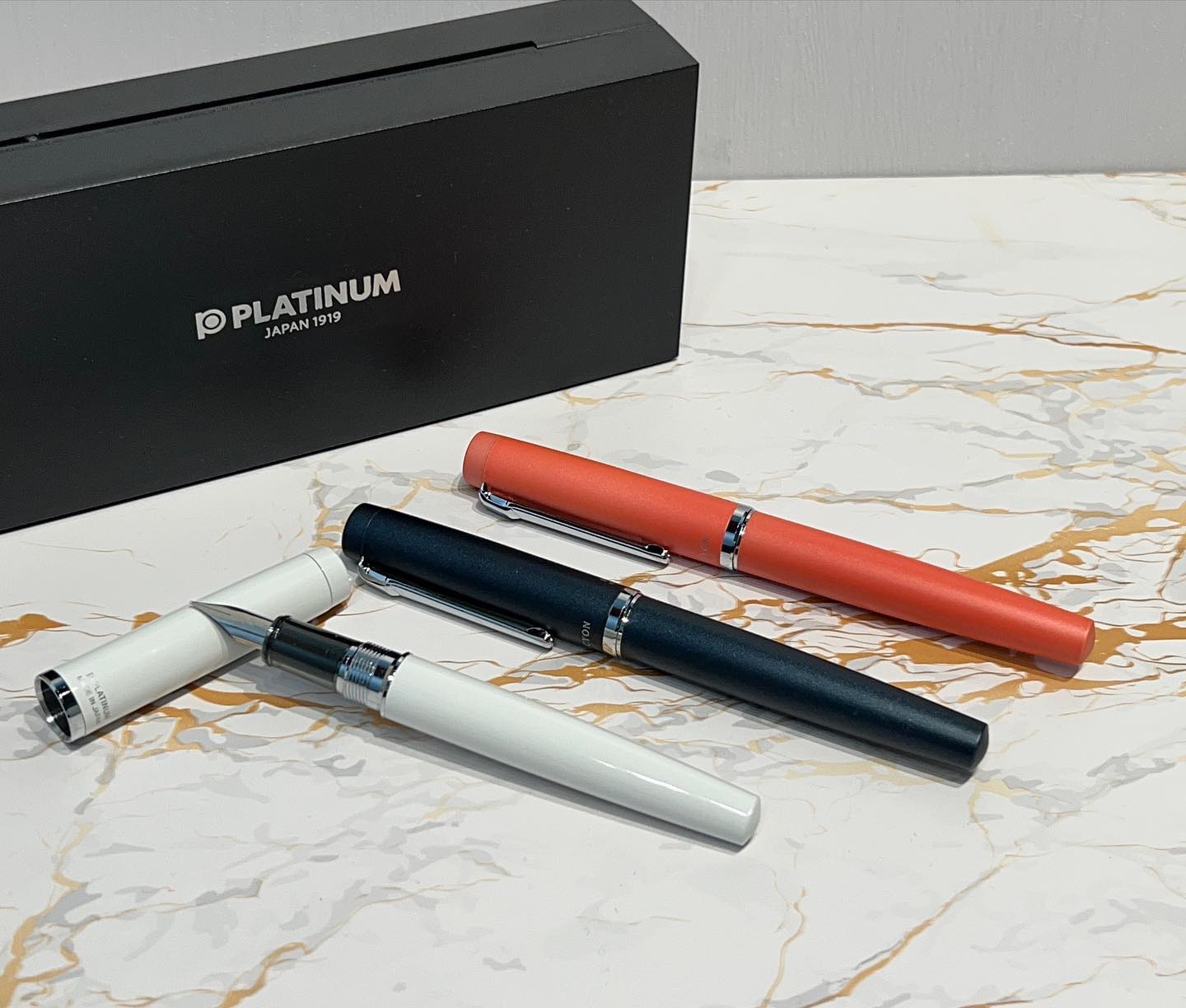
Platinum's Fountain Pen Ink Cleaner Kit has everything needed to keep your pens writing smoothly. The kits contain ink cleaner concentrate, a pump, and instructions. The Platinum Ink Cleaning Kit removes remaining clogged inks after a flush out.
Platinum makes two options: a kit for Platinum pens and a kit for European pens. The European kit includes a pump that fits with the international-size short ink cartridges.
FAQ: Cleaning a Fountain Pen
1. How often should you clean a fountain pen?
Every 4 to 8 weeks with regular use, and always when you change inks. A pen you're retiring for a while should be cleaned and stored empty.
2. What's the best way to clean a fountain pen at home?
Cool water, nothing fancy. Rinse the nib section under the tap, then soak or flush it until the water runs clear. Ninety percent of cleaning jobs need nothing more than that.
3. Can I use vinegar or alcohol to clean a fountain pen?
No. Vinegar can corrode metal parts and alcohol can craze or crack resin and celluloid. If water isn't enough, use a purpose-made pen flush, it costs a few dollars and can't hurt the pen.
4. Can I use dish soap?
One drop in a glass of water is fine and helps with sheening or highly saturated inks. Rinse thoroughly afterward, you don't want soap residue in the feed.
5. How do I dry a fountain pen after cleaning?
Stand the nib section nib-down in a cup lined with a paper towel and give it 12 to 24 hours. If ink ever ends up somewhere it shouldn't, here's our guide to getting fountain pen ink out of clothes.
6. My pen still writes poorly after cleaning - now what?
Check that the cartridge or converter is seated properly, and try a wetter ink. If it still skips, the nib may be misaligned, bring it by the shop and we'll look at it together.
That's the whole routine, a rinse every month or two, a proper flush when you change inks, and your pens will outlast all of us. Cleaning is half of pen care; the other half is storage, and we've covered that in how to store and care for your fountain pens. And if you're cleaning because you're about to try a new colour, my bottled ink guide is the fun part.
If a pen has you stumped, come by the store with it, there's not much we haven't unclogged at the counter. — Salome


Comments